Discover hidden connections
Examine how decisions and changes in one part of a system affect possibilities elsewhere.
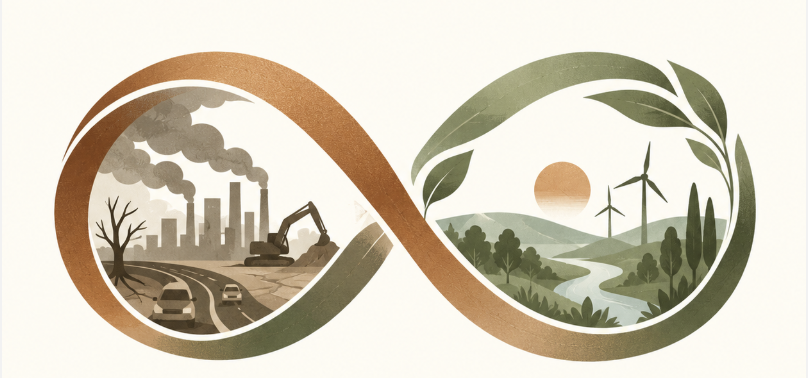 MetamorphosisResearch and Advisory for Transformation
OUR APPROACH
Sustainability challenges are shaped by relationships between people, institutions, technologies, markets and the environments in which they operate. Changes in one place affect possibilities elsewhere, competing goals create difficult choices, and unexpected events can alter the conditions for action.
We help organisations make sense of these relationships, identify what needs to change together and adapt as conditions evolve.
UNDERSTANDING TRANSFORMATION
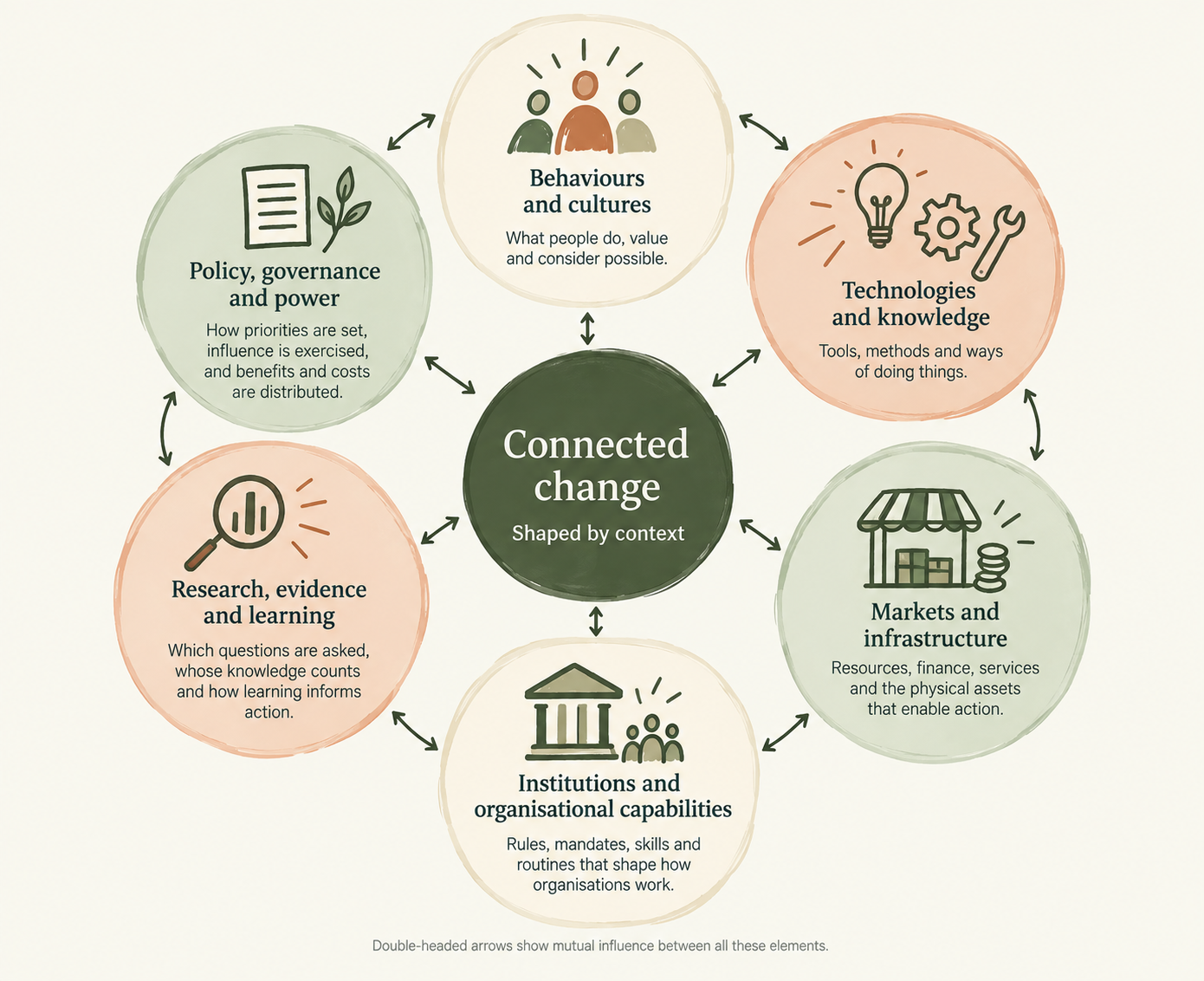
How we produce food, provide healthcare, generate energy or move around depends on more than individual choices or technologies. It also depends on infrastructure, markets, public policies, cultural habits and the organisations involved. Together, these connected elements form a system.
No single change can achieve transformation. It requires several interconnected changes—and attention to how they can happen together.
We examine six connected elements:
Their importance—and the relationships between them—depend on the context.
Examine how decisions and changes in one part of a system affect possibilities elsewhere.
Make competing priorities, trade-offs and their consequences visible enough to address.
Revisit assumptions and adjust the direction of work as conditions and possibilities change.
FROM UNDERSTANDING TO ACTION
Transformation is neither simply top-down nor bottom-up. We identify who can contribute evidence, resources, trust and influence—and which alliances can connect them.
Read the systematic review (opens in a new tab)A new practice may need infrastructure, finance or policy change. We identify what needs to happen first and what must move together.
Unexpected events can disrupt plans and open possibilities. We help teams revisit assumptions and adapt as conditions change.
WHERE OUR EXPERIENCE BEGINS
Our experience in food systems grounds how we approach sustainability transformation. Food connects land and water, climate and biodiversity, health and livelihoods, energy and transport. Working across these relationships has shaped how we understand institutional change, coordination and uncertainty—and informs our work in other connected systems.
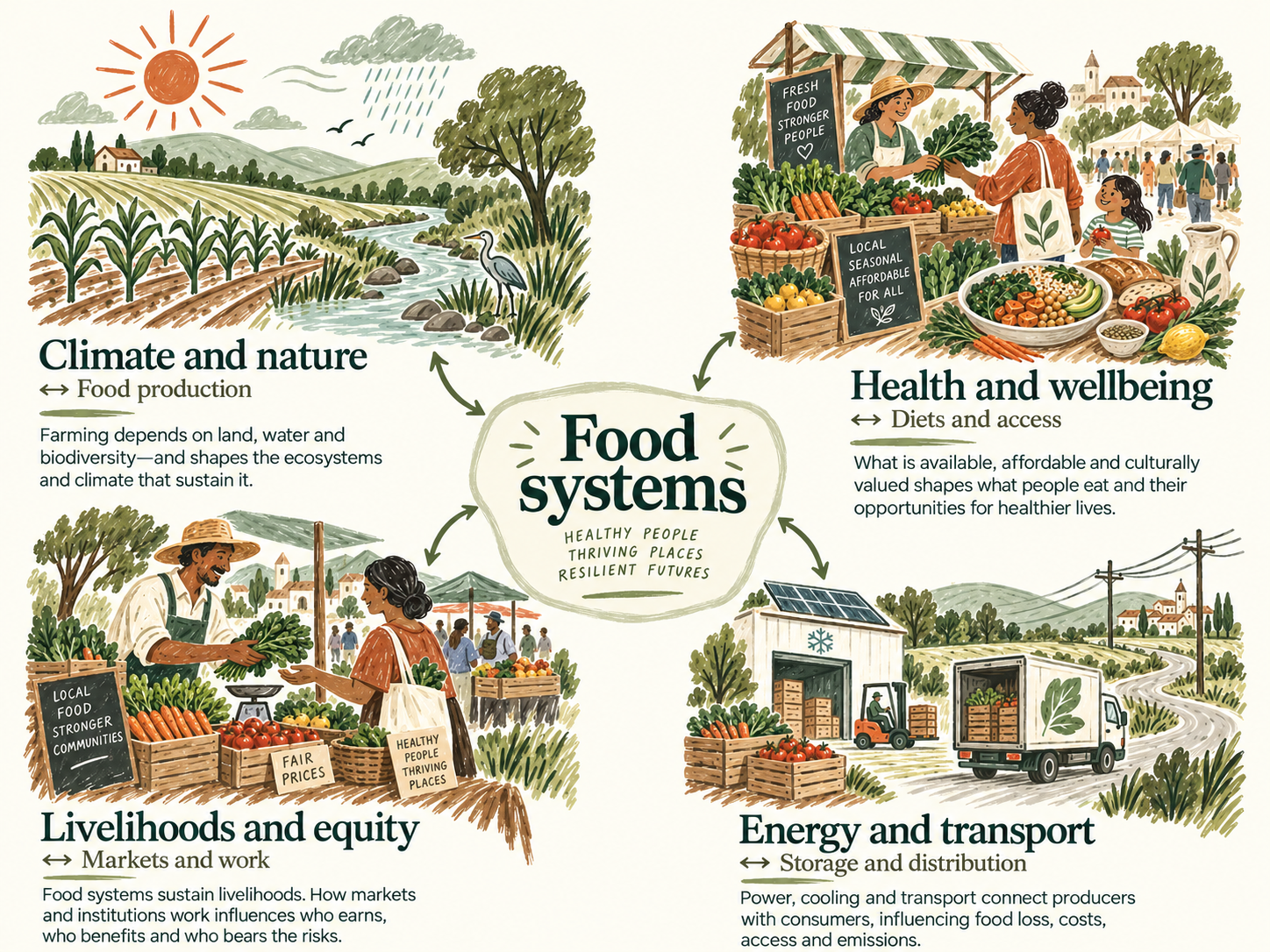
↔ Food production
Farming depends on land, water and biodiversity—and shapes the ecosystems and climate that sustain it.
↔ Diets and access
What is available, affordable and culturally valued shapes what people eat and their opportunities for healthier lives.
↔ Markets and work
Food systems sustain livelihoods. How markets and institutions work influences who earns, who benefits and who bears the risks.
↔ Storage and distribution
Power, cooling and transport connect producers with consumers, influencing food loss, costs, access and emissions.
Change depends on understanding these connections—and which actions need to happen together.
Start a conversation
Tell us what you are trying to change, the decisions you face and where you need support.
Discuss a project